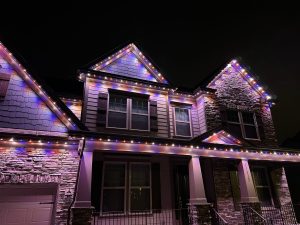

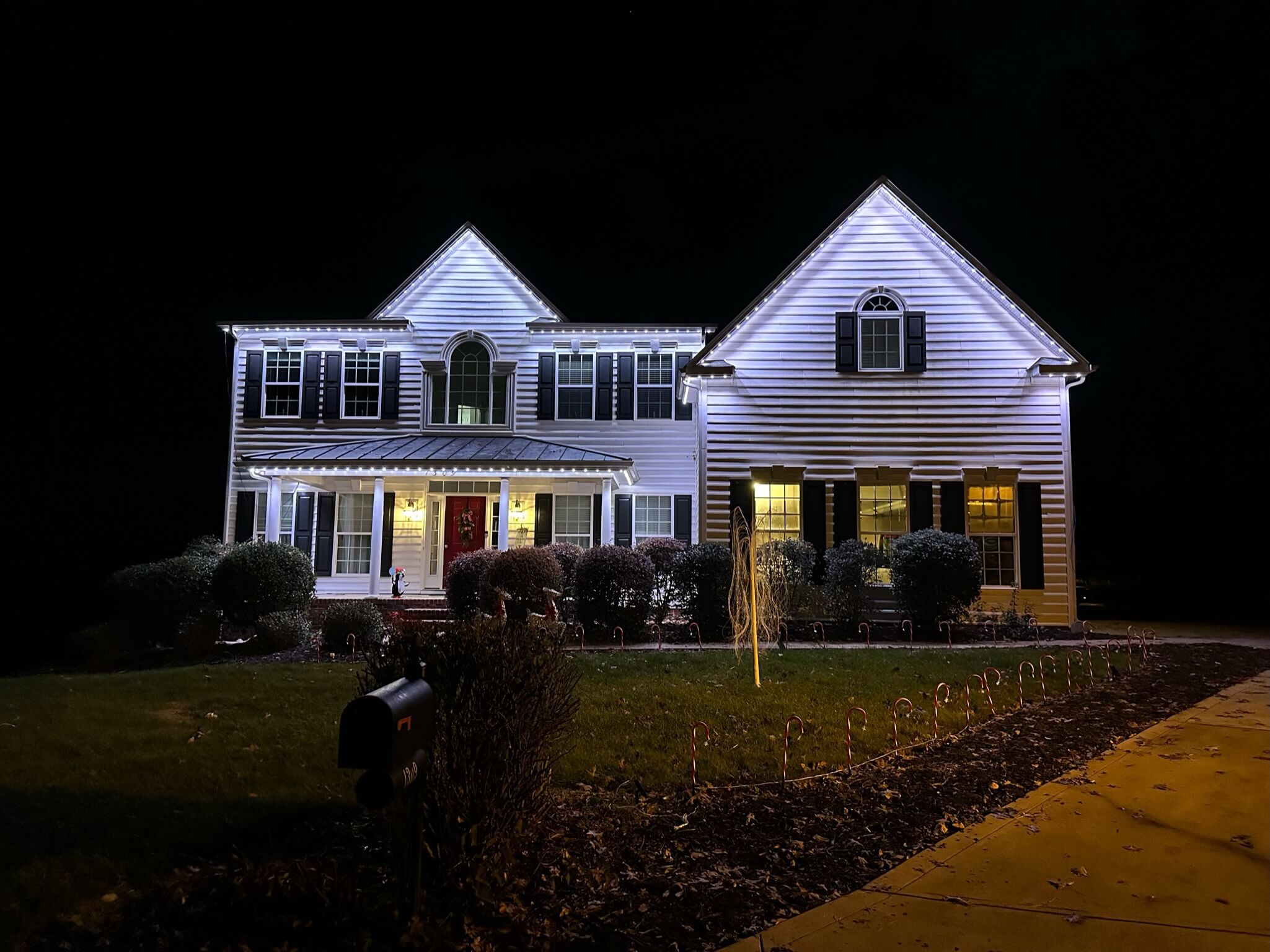
Have you ever driven past a house at night and wondered why it looked so polished while every other home on the block disappeared into the dark? Chances are, soffit lighting was doing the heavy lifting. Installed under the roof overhang, these small fixtures cast a clean downward wash of light that makes a home look intentional, welcoming, and secure, all without a single glaring bulb in sight.
- What Is Soffit Lighting?
- How Soffit Lighting Works
- Benefits of Soffit Lighting for Homes
- Types of Soffit Lights to Consider
- How We Install Soffit Lighting
- Ready to Light Up Your Home?
- Frequently Asked Questions
What Is Soffit Lighting?
Soffit lighting refers to fixtures mounted in the horizontal underside of a roof overhang, also called the soffit. Unlike path lights that sit at ground level or wall sconces that mount beside a door, soffit lights are tucked out of sight overhead. You see the effect, a smooth pool of downward light, rather than the fixture itself.
This low-profile placement is what separates soffit lighting from most other accent lighting options. The fixtures blend into the architecture so well that visitors often cannot pinpoint where the light is coming from. That clean, intentional look is a big part of why this style has grown so popular with homeowners who want curb appeal without clutter.
Soffit lighting pairs naturally with other exterior elements like trim, fascia, and siding. Because it is housed under the overhang, it is also sheltered from direct rain and debris, which extends fixture life compared to fully exposed options. It is a practical solution that also happens to look great.
How Soffit Lighting Works
Each soffit light is wired into a low-voltage or line-voltage circuit that runs through the soffit cavity. A transformer steps down standard household current when the system is low-voltage, making the wiring safer to handle and cheaper to run. The fixtures themselves are typically recessed cans or surface-mounted pods that sit flush with the soffit board.
Most modern systems use permanent LED lights, which draw far less energy than older halogen or incandescent options. LEDs also run cooler, which matters when fixtures are enclosed in a tight soffit cavity. A good LED soffit light can last 50,000 hours or more before needing replacement.
Control options range from simple dusk-to-dawn photocells to smart-home timers and color-changing RGB controllers. Many homeowners tie their soffit lights into the same system that controls their permanent outdoor lighting, so everything runs on one schedule. That level of automation means you never come home to a dark house again.
Benefits of Soffit Lighting for Homes
Soffit lighting for homes delivers three wins at once: security, safety, and style. On the security side, a well-lit exterior removes the dark corners that make a property an easier target. Motion-sensor-enabled soffit lights take that a step further by alerting you, and anyone nearby, when something moves around the perimeter.
Safety is the quieter benefit. Lit soffits illuminate walkways, steps, and entry areas without requiring separate ground-level fixtures that can be tripped over or damaged by lawn equipment. Guests find their way to the door easily, and you can see clearly when carrying groceries in after dark.
The style benefit is the one most homeowners notice first. Soffit lighting acts as architectural lighting, emphasizing rooflines, columns, and facade details that are invisible at night without it. Combine that with trim lights along the roofline and you have a finished, layered look that holds up to any professionally landscaped yard.
Types of Soffit Lights to Consider
Not all soffit lights are built the same way, and the right choice depends on your soffit material, the look you want, and how much flexibility you need over time. Here are the main categories worth knowing.
- Recessed downlights: Cut flush into the soffit board for a clean, almost invisible look. Best for painted wood or vinyl soffits.
- Surface-mounted pods: Mount flush against the outside face of the soffit board rather than being recessed into it. Easier to install without cutting into the board, and useful when internal wiring access is limited.
- Color-changing RGB fixtures: Allow you to shift from warm white everyday lighting to festive colors for holidays. Systems like Gemstone Lights are purpose-built for this kind of flexibility.
- Directional fixtures: Pivot to aim light at a specific wall section, column, or tree. Great for adding depth to a flat facade.
If you want year-round flexibility, color-capable fixtures are worth the small premium. They handle everyday security lighting in warm white and switch to seasonal palettes for holidays without requiring you to hang and remove strings of lights each year. That makes them a natural complement to permanent holiday lighting systems.
How We Install Soffit Lighting
A typical soffit lighting installation on a single-family home takes one day. The crew maps out fixture spacing, usually every six to eight feet along the soffit run, then routes wiring through the cavity to a central transformer or breaker connection. Fixtures are set, wired, and tested before any covers go on.
The soffit material affects how the job goes. Vinyl soffit panels are simple to remove, work through, and snap back into place. Wood soffit requires careful drilling and sealing to prevent moisture intrusion. Aluminum soffit sits somewhere in between. A qualified installer will know how to handle each material cleanly without leaving visible patches.
Homeowners sometimes ask whether soffit lighting is a good fit for commercial properties too. The answer is yes, and the same logic applies: sheltered placement, low maintenance, and architectural impact. Many businesses that invest in commercial outdoor lighting use soffit fixtures along covered entrances and walkways for exactly those reasons.
Ready to Light Up Your Home?
Soffit lighting is one of the most effective upgrades you can make to your home’s exterior, and it is easier to get installed than most homeowners expect. At Marvelous Lights, we help homeowners choose the right fixtures, spacing, and control system to match their home and their budget. Visit our soffit lighting service page to see what we offer, or contact us directly to schedule a free consultation. We would love to show you what your home looks like after dark when it is properly lit.
Frequently Asked Questions
How many soffit lights do I need for my home?
Most homes need one fixture every six to eight feet along each soffit run, which works out to roughly 20 to 40 fixtures for a typical single-story house. The exact number depends on your home’s perimeter, ceiling height, and how bright you want the result. A professional site visit gives you a precise count.
Are soffit lights energy efficient?
Yes, especially when you choose LED fixtures, which use far less energy than older options. ENERGY STAR notes LEDs use at least 75 percent less energy than incandescent lighting. A full soffit lighting system running LED bulbs for eight hours a night typically adds only a few dollars to your monthly electricity bill. Pairing LEDs with a timer or photocell keeps runtime tight and costs even lower.
Can soffit lights change color for the holidays?
Yes, RGB or RGBW soffit fixtures can display millions of color combinations and are controllable via a smartphone app or smart-home hub. You can set warm white for everyday use and switch to red and green for December, blue and white for winter, or any other palette you want. This eliminates the need to hang and remove seasonal string lights each year.
How long does soffit lighting installation take?
Most residential soffit lighting projects are completed in one day. Larger homes or those with complex rooflines may take two days. The timeline includes layout planning, wiring, fixture mounting, and a full test of every light before the crew leaves. You get a fully functional system the same day work begins.
Do soffit lights require a lot of maintenance?
No, soffit lighting is one of the lowest-maintenance exterior lighting options available. Because the fixtures sit under the overhang, they are shielded from direct rain, hail, and most debris. LED fixtures are rated for 50,000 hours or more, so bulb replacements are rare. An annual inspection to clear any spider webs or dust from the lens is usually all that is needed.
Will soffit lighting increase my home’s value?
Exterior lighting improvements, including soffit lighting, are widely considered to improve curb appeal and perceived value. While the exact return varies by market and home price point, a well-lit exterior helps a listing photograph better, show better at dusk, and signal to buyers that the home has been cared for. It is a small investment with a visible impact.