

Every November, millions of homeowners drag out tangled strands of lights, spend a weekend on a ladder, and then do it all again in reverse come January. If that ritual has started to feel more like a chore than a celebration, permanent holiday lighting may be exactly what your Huntersville home needs. But before you commit, there are real decisions to make around system types, costs, and installation quality that will affect how happy you are for years to come.
- Permanent Holiday Lighting for Huntersville Homes
- Key Benefits for Huntersville Homeowners
- Understanding Your System Options
- What Professional Installation Actually Involves
- What Shapes Your Permanent Lighting Investment
- Frequently Asked Questions
Permanent Holiday Lighting for Huntersville Homes
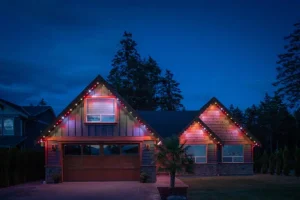
Permanent holiday lighting refers to a fixed LED system mounted directly to your roofline, soffit, or fascia that stays in place all year. Unlike traditional clip-on strands you hang each season, these systems are built to be weather-resistant and controlled through an app or remote. You choose when the lights are on, what color they display, and what pattern they run, whether that is warm white for a dinner party in October or red and green for Christmas morning.
The core product in most residential installations is a channel or track mounted flush against the home. Individual LED nodes sit inside the track, protected from rain, UV exposure, and the temperature swings that are common in the Charlotte metro area. Because the hardware never comes down, there is no annual reinstallation, no storage bin to find space for, and no risk of a fall from a ladder. Our permanent holiday lighting service page walks through the full range of what these systems can do.
These systems are also distinct from basic rope lights or fairy lights sold at big-box stores. The LEDs are individually addressable, meaning each node can display a different color at the same time. That capability opens up animations, chase effects, and custom color palettes tied to any holiday or occasion on your calendar.
Key Benefits for Huntersville Homeowners
Huntersville sits in a climate zone that delivers hot summers, occasional ice storms, and everything in between. A system engineered to handle that range is a genuine asset rather than a seasonal decoration. Permanent holiday lighting is rated for outdoor exposure year-round, which means the components you invest in are not sitting in a garage degrading between uses.
Beyond durability, the convenience factor is hard to overstate. Families with busy schedules can schedule lights to turn on at sunset and off at midnight without touching a switch. Hosting a Fourth of July cookout? Switch to red, white, and blue from your phone. Supporting a local sports team during playoff season? Match their colors in under a minute. The flexibility makes permanent holiday lighting genuinely useful on more than a dozen nights a year.
There is also a curb appeal dimension that matters for home value. A well-lit roofline elevates the exterior presentation of a property every evening, not just in December. Pairing holiday lighting with accent lighting on landscape features or architectural details creates a layered look that feels intentional rather than seasonal. Many Huntersville homeowners find that neighbors start asking about their installer within the first few weeks of operation.
Understanding Your System Options
Not every permanent lighting product on the market is the same, and the differences matter more than most buyers expect. The two broadest categories are channel-based systems and soffit-mount systems. Channel-based products like Gemstone Lights use a low-profile aluminum track that hugs the roofline and protects each LED node inside a polycarbonate lens. Soffit-mount systems route the LEDs through the soffit material itself, making the hardware nearly invisible during the day.
Both approaches use permanent LED lights that are rated for tens of thousands of hours of operation. LEDs consume a fraction of the power that incandescent strands draw, which keeps ongoing electricity costs low even if you run the lights every evening. For homeowners who leave lights on for ambiance rather than just holidays, that efficiency difference adds up meaningfully over a year.
Control systems also vary. Most quality installations include a WiFi-connected controller paired with a smartphone app. Some systems support voice control through smart home platforms. When comparing options, ask specifically about app reliability, firmware update history, and whether the controller requires a subscription fee. A beautiful set of lights paired with a clunky app is a frustrating combination.
You may also want to consider trim lights as a complement or alternative, particularly for homes with architectural details that deserve their own accent. Mixing system types on one property is possible when installation is planned carefully from the start.
What Professional Installation Actually Involves
Professional installation of permanent holiday lighting is not simply stapling lights to a fascia board. A proper job starts with a site assessment that measures linear footage, identifies power source locations, and notes any obstacles like gutters, dormers, or trees that affect the run. That assessment drives the material estimate and installation plan.
The physical installation typically involves mounting the track or channel with fasteners rated for outdoor use, routing low-voltage wire along the roofline in a way that is both weatherproof and visually tidy, and connecting to a dedicated controller mounted in a protected location. Soffit lighting installs require drilling through the soffit panel in a consistent pattern, so precision matters for the finished appearance. A rushed installation shows.
After the hardware is set, a good installer walks you through the control app, sets up your WiFi connection, and demonstrates at least a handful of the available scenes and effects. Ask about warranty coverage on both the product and the labor. Reputable installers stand behind their work and can return quickly if a section of lights fails or a controller needs replacement. For homes with more elaborate exterior goals, architectural lighting planning can be incorporated at the same time to create a unified design across the whole property.
What Shapes Your Permanent Lighting Investment
Permanent holiday lighting carries a higher upfront cost than a few boxes of store-bought strands. Three factors drive that cost the most: the linear footage of your roofline, the system brand you choose, and the complexity of the roofline itself. Larger or two-story homes, or those with significant architectural detail, can run higher. Getting a written quote based on your specific property is the only reliable way to budget accurately.
The comparison that makes the most financial sense is a multi-year view. When you factor in the annual cost of replacement strands, storage, and the time or labor cost of hanging and removing lights every year, the break-even point for a permanent system is often only a few years away. After that, you are ahead on both money and time.
Energy savings also contribute to the long-term case. LED systems draw dramatically less power than traditional incandescent lights. Running a full roofline of permanent LEDs every evening typically costs just a few dollars per month in electricity. That compares favorably to older setups, which noticeably increased a December electric bill. For homeowners considering permanent outdoor lighting across multiple areas of their property, the efficiency gains compound quickly.
Ready to get a quote for your Huntersville home? Contact Marvelous Lights today and we will put together a detailed estimate based on your property, your preferences, and the system that fits your goals. Visit our permanent Christmas lights page to see the full scope of what we install, and reach out to schedule your consultation. There is no obligation, and the conversation usually takes less than fifteen minutes.
Frequently Asked Questions
How long does permanent holiday lighting last?
Most quality permanent holiday lighting systems are rated for 50,000 hours or more of LED operation, which translates to many years of regular use. The track and mounting hardware are built from aluminum and UV-resistant materials that hold up through years of sun, rain, and freezing temperatures. Warranty terms vary by brand, so ask for them in writing.
Will permanent lights damage my roofline or soffit?
No, when installed correctly by a trained professional, permanent holiday lighting does not damage your roofline or soffit. Installers use fasteners and mounting methods appropriate for the specific material, whether that is wood fascia, vinyl soffit, or aluminum trim. The low-voltage wiring does not generate heat that could cause warping or discoloration. A professional assessment before installation identifies any areas that need special handling.
Can I use permanent holiday lighting for non-holiday occasions?
Yes, that is one of the biggest advantages of these systems. Because the lights are app-controlled and individually addressable, you can set any color or effect for birthdays, sports events, neighborhood gatherings, or simply as nightly ambient lighting. Many homeowners run a soft warm white most evenings and switch to holiday-specific palettes only a few times per year. The system works for every occasion you want to mark.
How visible is the hardware during the day when the lights are off?
Most permanent holiday lighting systems are designed to be low-profile and blend with the roofline when the lights are off. The track is typically available in colors matched to common fascia and trim shades, including white, bronze, and black. Soffit-mount systems are even less visible because the LEDs sit flush inside the soffit material. From street level during daylight, a well-matched installation is nearly undetectable.
Do I need an electrician to install permanent holiday lighting?
Most permanent holiday lighting systems run on low-voltage power and connect to a standard outdoor outlet, so in our experience a licensed electrician is not always needed for the lights themselves. However, if your home lacks a conveniently located outdoor outlet or needs a dedicated circuit added, an electrician will need to handle that portion. A professional lighting installer can coordinate that work or advise you on what your existing electrical setup can support before installation begins.
What happens if one section of the lights stops working?
A single failed section does not take down the entire system. Permanent holiday lighting uses individually addressable nodes connected along a run, so a fault in one area is isolated and easy for a technician to diagnose. Most installers offer service visits to replace faulty nodes or controllers, and quality systems include warranty coverage that keeps repair costs low during the covered period. Keeping your installer’s contact information handy makes any service call quick and straightforward.