
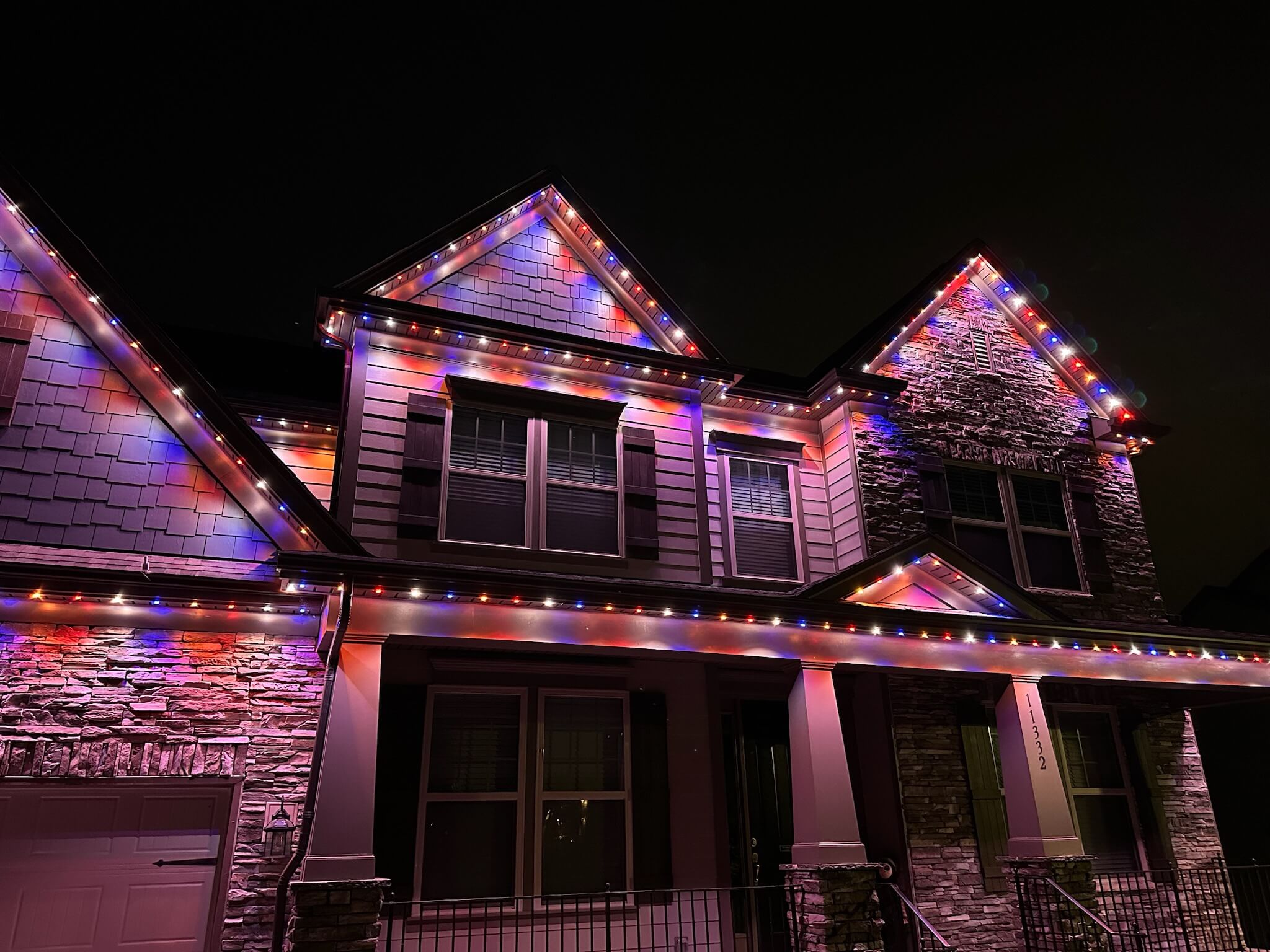
You want permanent christmas lights that look great year-round, not just for six weeks in December. Two brands dominate nearly every conversation: Gemstone Lights and Jellyfish Lighting. Both promise app-controlled LED magic tucked neatly into your roofline, but they differ in ways that can affect your budget, your warranty, and how your home looks on a Tuesday in July. Here is an honest, side-by-side look so you can pick the right system.
- What Are Permanent Christmas Lights, Exactly?
- Gemstone Lights Overview
- Jellyfish Lighting Overview
- What Affects Cost and Installation for Each System
- Which System Is Right for Your Home?
- Frequently Asked Questions
What Are Permanent Christmas Lights, Exactly?
Before comparing brands, it helps to understand what the category actually means. Permanent christmas lights are low-profile LED fixtures installed once along your eaves, soffit, or roofline and left in place every season. No more hauling out ladders in November or untangling strings in the garage. You control colors and animations through a smartphone app, and the lights stay invisible against your trim when they are off.
The technology relies on individually addressable RGB or RGBW LEDs, which means each bulb can display a different color simultaneously. That is what allows a single strand to show red and green at Christmas, orange and purple at Halloween, and a steady warm white for a dinner party on any other night. Because the fixtures are rated for outdoor use year-round, they also function as accent lighting that highlights your home’s architecture every evening, not just during the holidays.
Both Gemstone and Jellyfish are built on this same foundation. The differences come down to hardware design, app experience, color accuracy, and how each company handles installation and support.
Gemstone Lights Overview
Gemstone Lights uses a track-and-puck system. Small circular LED nodes, often called pucks, snap into an aluminum track that mounts flush against your roofline. The result is one of the cleanest silhouettes available because the track itself blends with your fascia and the pucks disappear during daylight hours. If you care about how your home looks at noon as much as at midnight, that discretion matters.
The Gemstone app offers a wide library of preset animations, holiday themes, and custom color schedules. You can set timers, sync lights to music, and create zone-specific patterns, so the front gable runs a different scene than the garage. Gemstone lights use RGBW LEDs, adding a dedicated white channel that produces a cleaner, crisper white than mixing red, green, and blue together ever can. That white quality is noticeable in everyday architectural use.
Installation is typically done by certified dealers, which keeps quality consistent. Pucks are spaced at regular intervals, so coverage is even across long rooflines. The track system also makes bulb replacement straightforward: a failed puck pops out and a new one snaps in without disturbing the rest of the run.
Jellyfish Lighting Overview
Jellyfish Lighting takes a slightly different hardware approach. Their LEDs are housed in a flexible channel that also mounts to the roofline, but the overall profile can vary depending on how installers handle the channel against different fascia materials. Jellyfish has built a strong reputation on color vibrancy and the density of its LED placement, which produces smooth color gradients and rich animations that photograph well.
The Jellyfish app is widely praised for its ease of use. Preset holiday scenes are polished, and the scheduling tools are intuitive enough for non-technical homeowners to manage without help. The brand has also invested heavily in content, so you can browse a large community library of patterns other users have created and load them directly to your system.
One area worth noting is that Jellyfish uses RGB LEDs without a separate white channel in most configurations. Mixed white is perfectly usable and looks good in motion scenes, but if you plan to run steady warm-white architectural lighting most of the year, you may notice the difference compared to a dedicated white diode. Jellyfish also operates through a franchise dealer network, so installation quality and warranty support can vary by region.
What Affects Cost and Installation for Each System
Both systems sit in the premium tier of permanent outdoor lighting. Installation cost for a typical single-family home depends on linear footage, roofline complexity, and your region, and is similar for either brand. Larger homes or those with steep pitches, dormers, or multiple rooflines require more linear footage and labor, which is what increases the quote. That quote covers hardware, labor, and initial programming.
Gemstone’s track system can add a small amount to material cost because the aluminum extrusion is a distinct component, but many homeowners find the cleaner daytime appearance worth it. Jellyfish costs are similar, though channel pricing shifts depending on your dealer’s market. Neither brand publishes a fixed national price list, so getting at least two quotes from local installers is always a smart move.
Both systems use energy-efficient LEDs that draw a fraction of the power that traditional incandescent holiday lights consume. A full roofline of permanent LED lights running four hours a night typically adds only a few dollars to your monthly electricity bill. That efficiency is a meaningful long-term advantage over buying and running new temporary strings every year. Installation time for either system on an average home is usually one full day.
Which System Is Right for Your Home?
Choosing between the two comes down to your priorities. If everyday architectural appearance and white-light quality rank highest, Gemstone’s RGBW puck system has the edge. Its track profile is low-key, and the dedicated white channel makes it a strong choice for homeowners who want their roofline to look like refined soffit lighting on ordinary nights rather than a holiday display.
If vibrant color animations and a highly polished app experience matter most, Jellyfish is worth a close look. The system performs well for households that love rotating through holiday themes and sharing patterns with a broader community of users. For commercial properties looking at commercial outdoor lighting with bold seasonal branding, Jellyfish’s animation depth can be a real draw.
Both brands outperform temporary string lights on every practical measure: longevity, weather resistance, energy use, and convenience. The better question for most homeowners is not which brand is objectively superior but which one aligns with how you actually plan to use the lights day to day. Talking through your roofline, your typical color preferences, and your budget with a qualified installer will get you to the right answer faster than any spec sheet.
At Marvelous Lights, we install both systems and will give you a straight recommendation based on your specific home and goals. Visit our permanent holiday lighting page to learn more about what each option looks like in practice, or reach out for a no-pressure quote. We will walk your roofline, measure the footage, and show you exactly what either system would cost and look like before you commit to anything. Your home deserves lighting that works every single day of the year, and we want to help you get there.
Frequently Asked Questions
How long do permanent christmas lights last?
Most permanent christmas light systems use long-life LEDs rated for tens of thousands of hours, which translates to many years of typical use. Both Gemstone and Jellyfish hardware is weatherproof and designed to handle temperature swings, rain, snow, and UV exposure without significant degradation. Individual failed nodes can usually be replaced without swapping the entire system.
Can I control Gemstone and Jellyfish lights from my phone?
Yes, both systems are fully app-controlled through iOS and Android apps. You can change colors, switch holiday themes, set daily schedules, and run animations all from your smartphone. Gemstone uses its own branded app, and Jellyfish uses the Jellyfish Lighting app. Both connect to your home Wi-Fi, so no separate hub or remote is required.
Are permanent christmas lights visible during the day?
Both systems are designed to be low-profile when off. Gemstone’s aluminum track and small pucks blend closely with the fascia, making the system nearly invisible in daylight. Jellyfish channels are similarly discreet, though the exact appearance depends on the color match between the channel and your trim. A good installer will color-match hardware to your roofline as part of the job.
Do these systems work on any home style?
Yes, both systems can be adapted to most residential and commercial rooflines. Traditional gable homes, craftsman bungalows, modern flat-roof buildings, and multi-story structures all work. Complex rooflines with dormers, angles, or multiple pitches require more planning and may increase installation time, but neither system is limited to a single architectural style. Your installer will assess the layout before quoting.
What warranty do Gemstone and Jellyfish offer?
Warranty terms vary by brand, dealer, and region, so ask your installer for the specifics in writing before signing a contract, and note that labor warranties are set by the installing dealer. Gemstone’s certified dealer program tends to standardize warranty terms more consistently across markets, while Jellyfish warranty coverage can differ more between franchise locations.
What affects the cost to run permanent christmas lights each month?
Monthly operating costs are very low. Running a full roofline of permanent LED lights for four hours per night adds very little to your electricity bill, though the exact amount depends on your local utility rate and total footage. LEDs draw a fraction of the wattage that traditional incandescent strings use, so the long-term energy savings are substantial compared to buying and running temporary lights every holiday season.