

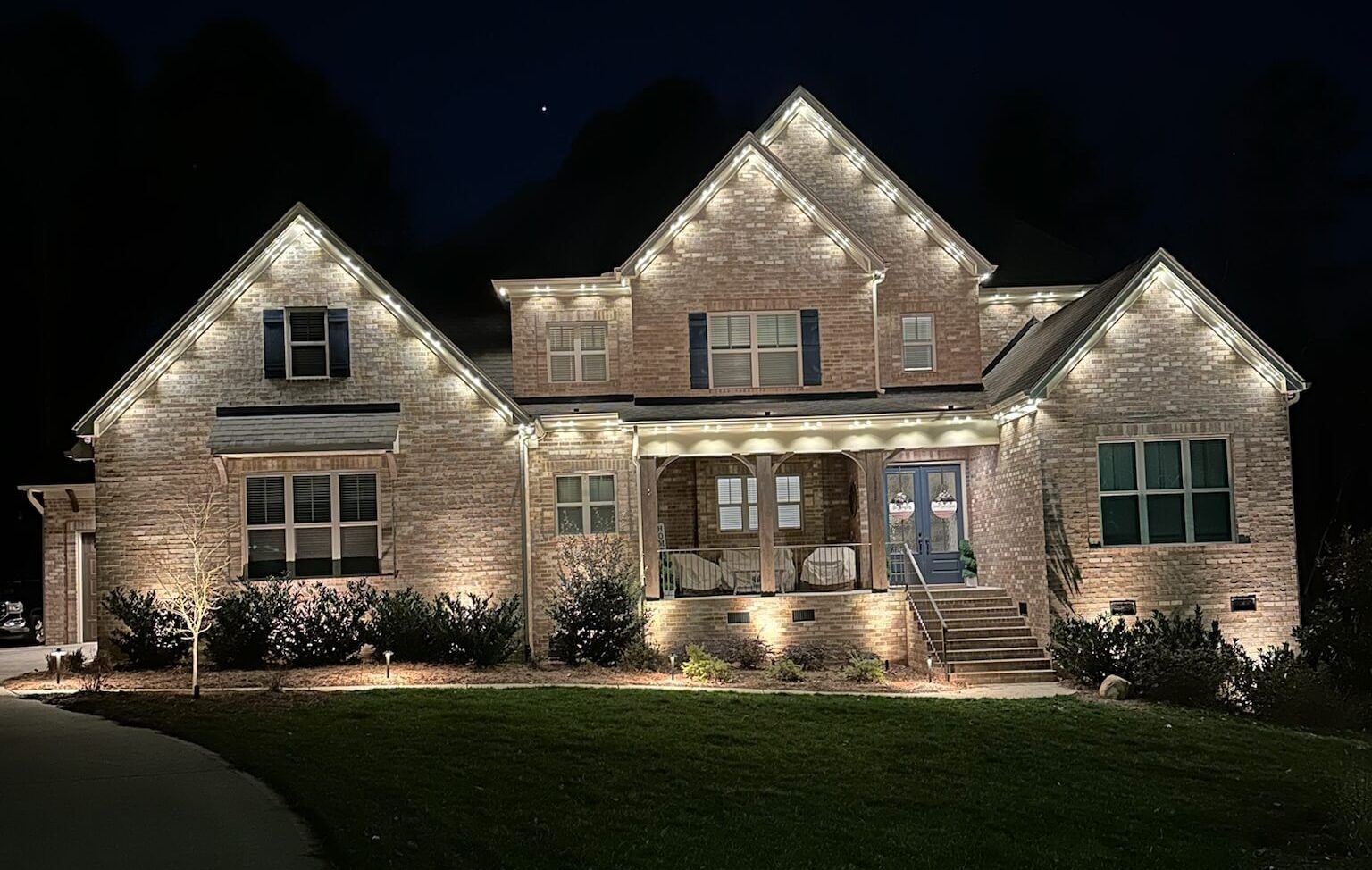
Choosing the right type of outdoor lighting can make all the difference in how your home looks and performs after dark. Whether you are illuminating your walkway, accenting your garden, or highlighting your home’s architecture, the type of power source you choose matters. Let’s break down the three main types of outdoor lighting systems and explore which one might be best for your home.
1. Line-Voltage Outdoor Lighting
What it is:
Line-voltage lighting uses the standard 120-volt electrical system that already powers your home. It connects directly to your main electrical lines, similar to indoor fixtures.
Pros:
- Produces strong, bright illumination that covers large areas
- Great for driveways, security lighting, and large yards
- Compatible with many commercial-grade fixtures
Cons:
- Requires professional installation and proper wiring
- Uses more energy than other types
- Can be more expensive upfront due to electrical requirements
Best for: Homeowners who need maximum brightness for large outdoor areas or who want a permanent, high-powered setup.
2. Low-Voltage Outdoor Lighting
What it is:
Low-voltage systems operate at 12 volts using a transformer that reduces the standard household current. This is the most common and flexible type of outdoor lighting for residential use.
Pros:
- Energy-efficient and safe for wet environments
- Easier to install and modify
- Wide range of fixture styles available
- Soft, warm glow perfect for landscaping and pathways
Cons:
- Requires a transformer to regulate voltage
- May need occasional maintenance if connections loosen
Best for: Homeowners who want customizable, efficient, and long-lasting outdoor lighting. This is the type used in most Marvelous Lights installations for its reliability and beauty.
3. Solar Outdoor Lighting
What it is:
Solar lights use built-in panels to absorb sunlight during the day and automatically turn on at night. They do not require any wiring or electricity from your home.
Pros:
- Easiest installation of all three options
- Completely off-grid and eco-friendly
- Perfect for small spaces or areas far from outlets
Cons:
- Dependent on sunlight for charging
- Light output can be dimmer or inconsistent
- Batteries may need replacement over time
Best for: Decorative or temporary setups where you want convenience and sustainability over brightness.
4. Comparing the Three Options
| Feature | Line-Voltage | Low-Voltage | Solar |
|---|---|---|---|
| Brightness | Very Bright | Moderate | Low to Moderate |
| Energy Efficiency | Low | High | Very High |
| Installation | Professional Electrician | Simple / DIY or Pro | Easiest |
| Maintenance | Moderate | Low | Moderate |
| Cost | Higher | Moderate | Low |
| Best Use | Driveways, Security | Pathways, Landscape, Roofline | Decorative, Small Spaces |
Each system has its place, but for most homeowners, low-voltage lighting offers the ideal balance of brightness, safety, efficiency, and long-term value.
5. Why Marvelous Lights Chooses Low-Voltage LEDs
At Marvelous Lights, we use advanced low-voltage LED technology for our permanent lighting installations. This setup gives homeowners bright, customizable lighting that is safe, energy-efficient, and built to last for years.
Low-voltage LEDs are discreet, durable, and perfect for highlighting your home’s unique design features without high maintenance or energy costs.
6. Make the Smart Choice for Your Home
Whether you want year-round elegance or festive color-changing displays, the right lighting system depends on your goals and home layout. The experts at Marvelous Lights can help you design a solution that fits your needs and budget.
✨ Schedule your free quote today and find out why low-voltage permanent lighting is the best choice for homeowners who value quality, safety, and style.


